
At the Heart of Family Learning: Interview with Frederick Riley of Weave: The Social Fabric Project
This month, I’m joined in conversation by Frederick Riley, executive director of Weave: The Social Fabric Project at the Aspen Institute. Frederick’s work shows important connections to the efforts we’re undertaking at NCFL. I’ve written before in this space about the disconnection that many parents feel from the social supports that previously sustained them, and the ways in which family learning programming can help to rebuild connectedness and belonging. The work of Weave provides another important avenue through which to rebuild social cohesion and a sense of belonging.
In December 2025, the Pew Research Center found that 44% of Americans believe that most people can’t be trusted. Weave works to tackle the problem of broken trust that has left Americans divided, lonely, and in social gridlock by connecting, supporting, and investing in local leaders to weave a new social fabric where they live, creating a sense of belonging and celebrating the everyday “good deeds” happening to support each other across communities.
Felicia C. Smith: Could you start out by sharing what is at the heartbeat of the work that you do at Weave: The Social Fabric Project?
Frederick Riley: At Weave, our work is centered on something simple but powerful: helping neighbors show up for one another again.
Across the country there are millions of people who quietly hold their communities together. They run the neighborhood food pantry, check on the elderly neighbor down the street, organize block gatherings, coach youth teams, or create spaces where people who might never otherwise meet can build trust. We call these people weavers because they weave together the social fabric of a community.
Our job at Weave is to find them, support them, connect them to one another, and help make their work more visible. We do that through storytelling, training, community networks, and increasingly through direct support to local organizations that can help these everyday leaders expand their impact.
At a time when trust in institutions is declining, we believe the future of a healthy democracy is going to be built from the ground up by neighbors who are willing to care for one another.
FCS: In late 2024, former Surgeon General Dr. Vivek Murthy sounded the alarm on what he called an “epidemic of loneliness” affecting parents across the country. From financial strain to concerns about children’s health and success, to time demands—many of the stresses cited in the report weren’t new. But what was new was the sense of disconnection parents felt, with no social supports to fall back on. What effects of this isolation are you seeing in the communities you work with?
FR: What Dr. Murthy named is something we see every day in communities across the country. The issue is not just loneliness. It’s relational poverty.
Parents are under enormous pressure today. Financial stress, time pressure, concerns about their children’s future, and the fragmentation of community life have left many families feeling like they are navigating life alone.
In the communities we work with, we hear people say things like: “I have neighbors, but I don’t really know them.” Or “When something goes wrong, I don’t know who I could call.”
That absence of everyday support networks has real consequences. It affects mental health, parenting stress, community safety, and even civic participation.
But the hopeful part is that we also see the antidote. When people create spaces where neighbors can gather, share meals, organize mutual support, or simply get to know each other again, something powerful begins to happen. Trust grows. People feel less alone. And communities become more resilient.
That is the kind of quiet, relational infrastructure that weavers help build every day.
FCS: As I learned more about the work that you’re doing with Weave, I was struck by the parallels with NCFL’s own work. Through our Family Learning Communities™, we’re bringing together families, schools, local leaders, and community organizations to build connections, coordinate and align their efforts, and create systems of support for families. Weave works directly with individuals—people who are likely already known as connectors within their communities—to weave social fabrics. Tell me more about the idea of individuals as community connectors through Weave. What aims, goals, and aspirations do people serving in this way have for themselves or for their communities?
FR: One of the most important insights of our work is that community transformation rarely starts with institutions. It usually starts with people.
In almost every neighborhood there are individuals who naturally bring people together. They are trusted. They notice who is missing. They create opportunities for connection.
We call these people weavers.
What’s remarkable is that most of them don’t see themselves as leaders. They are simply responding to what they see around them: loneliness, division, isolation, or a need for belonging.
Their aspirations are often very humble but incredibly powerful. They want a neighborhood where kids know each other. They want elders to feel seen. They want people from different backgrounds to sit at the same table. They want their community to feel like a place where people care for one another.
When you support those individuals, connect them to peers doing similar work, and provide even small resources, their impact multiplies quickly.
FCS: Weave has been a real pioneer with data, creating neighborhood-level snapshots of social trust traits that local weavers can see as a starting point for creating change. Can you give an example of how this data is being used?
FR: One of the tools we created is the Trust Map, which provides neighborhood-level insights into social trust, belonging, and community connection across the United States.
For many local leaders, this is the first time they’ve been able to see data about the relational health of their communities.
For example, a community might discover that residents report low levels of trust in neighbors or limited participation in civic life. That becomes a starting point for local action.
Community organizations might respond by hosting neighborhood gatherings, creating intergenerational programs, launching mutual aid networks, or supporting local connectors who bring people together across differences.
The data doesn’t solve the problem on its own, but it helps communities see the relational landscape they are working within and measure whether trust and connection are growing over time.
FCS: How did you go about capturing this data, and why did you think it was important to make it publicly available?
FR: We partnered with researchers and data organizations to compile a wide range of indicators related to social trust, civic engagement, belonging, and community connection.
What mattered to us was not just collecting the data, but democratizing it.
Too often, community-level data sits behind academic walls or institutional dashboards. We wanted everyday community leaders to have access to it.
By making the data public, a neighborhood organizer, a mayor, a school leader, or a local nonprofit can see insights about their community and begin asking important questions:
Where are we strong?
Where are we struggling?
What would it look like to rebuild trust here?
It becomes a shared starting point for local imagination and action.
FCS: Recently, Weave announced its first cohort of 25 Community Hosts, trusted local organizations that will serve as connectors and conveners, distributing microgrants to support local weavers and help neighborhoods thrive. In our own Family Learning Community work, anchor partners serve in a similar role, providing leadership to bring together cross-sector partners and create educational and workforce opportunities for children and families. We’ve found that discovering the right anchor partner provides a crucial foundation on which the rest of the work within communities can be built. How did you go about choosing your first cohort of Community Hosts? What were some of the key criteria that you were looking for on which to build further community success?
FR: Selecting our first cohort of Community Hosts was one of the most exciting steps in the evolution of Weave.
We looked for organizations that were already deeply trusted within their communities and had a track record of bringing people together across differences. These are organizations that understand that relationships are the foundation of community health.
We were also looking for partners who could serve as local conveners. Community Hosts are not simply implementing programs. They are creating ecosystems of connection. They identify local weavers, distribute microgrants to support their work, and help connect neighbors, nonprofits, schools, and civic leaders.
Geographic diversity also mattered. We wanted communities of different sizes and contexts, from rural towns to urban neighborhoods.
Ultimately, we chose organizations that already believed something fundamental: that the strength of a community comes from the relationships between its people.
FCS: Looking forward to the year ahead, what does success look like for Weave in 2026?
FR: For us, success in 2026 means that this movement of everyday weavers continues to grow across the country.
We are working with 25 Community Hosts today and plan to expand to 75 communities nationwide, each supporting local leaders who are strengthening connection and trust where they live.
But beyond scale, success also means something deeper.
It means more neighbors knowing each other.
More parents feeling supported.
More young people experiencing belonging.
More communities rediscovering that the solutions to many of our biggest challenges already exist within the relationships between people.
If we can help make relational leadership more visible and more valued in America, then we believe we are helping rebuild something that our country desperately needs: the social fabric itself.
FCS: What message would you like to leave our blog readers with?
FR: Everyone thinks their work is important. But I think this work is the challenge of our time. We’re living in a time when we don’t know what it means to check on neighbors when the storms of life arrive.
Statistically, they say that crime is lower in communities where people know their neighbors’ names. I want to live in a neighborhood where I know that if something happens, our neighbors will come check on us. They’ll knock on the door. Someone will share a cup of sugar when I need it.
We all have a lot of titles and a lot of roles. “Family member” is an important title to have. But one of the most important titles that we all should be trying to live up to is “good neighbor.”
I want to thank Frederick for taking the time to speak with me this month and share the work he’s doing alongside weavers in communities across the country.
There is a strong connection between the work of Weave and NCFL’s own efforts to strengthen social capital and support adults across all the roles they play in the community—from learner, to parent, to good neighbor. Through NCFL Family Learning Communities, we’re supporting our local partners to ensure that children and families have access to the learning opportunities that they need to thrive. Those efforts aren’t possible without the active participation of local leaders who possess a deep understanding of their community, its context, and the assets and challenges in play—and who are ready to roll their sleeves up to discover a path forward.
About the Authors
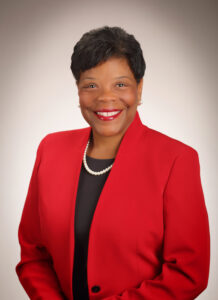
A lifelong educator and national thought leader for teaching and learning, Dr. Felicia C. Smith brings decades of experience to advance NCFL’s mission of working to eradicate poverty through education solutions for families.
Smith’s career in education spans nearly three decades, during which she has held various leadership roles across P-12, higher education, nonprofits, and philanthropy. Through her experience leading systems, she’s developed a unique perspective on a learner’s educational trajectory. She is driven by her commitment to educational equity and excellence for every learner. Her support of bottom-up innovations and top-down support has been her approach to advancing strong policies and practices that lead to transformative outcomes for children and families.
Before joining NCFL, Smith served as the senior director of Global Delivery at the National Geographic Society, where she oversaw the implementation and programming of domestic and global education strategies. Prior to that, Smith served as Assistant Superintendent of Teaching and Learning at Jefferson County Public Schools in Louisville, KY. She has also served as a senior program officer at the Bill & Melinda Gates Foundation and as associate commissioner for the Kentucky Department of Education. She began her career as an elementary classroom teacher and taught at the University of Kentucky. Recognized as an Aspen-Pahara Education Fellow, she serves on several national, regional, and state boards, including the Institute for Educational Leadership’s National Action Commission and New America’s National Commission on Learning Ecosystems. Smith also serves as Vice Chair of the Southern Regional Education Board. She serves as a coordinating council member of the Adult Literacy & Learning Impact Network (ALL IN).
Smith holds an Ed.D. in Educational Leadership and Administration and an M.A. in Elementary Education, with an emphasis on child and adult literacy development.
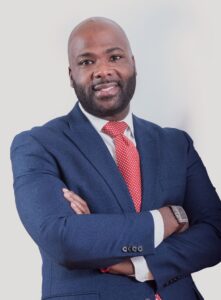
Frederick J. Riley is passionate about the development of communities and people. He is the Executive Director of Weave: The Social Fabric Project at the Aspen Institute. He spent nearly 2 decades working to ensure a positive life trajectory for youth with a focus on urban, underserved communities and poverty. He has served as Chief Advancement Officer for the Cincinnati YMCA, National Director of Urban Development for YMCA of the USA and has had held similar positions with YMCA of Southwest Illinois, Metro Atlanta YMCA, and, nationally, with the National Conference of Black Mayors.