
At the Heart of Family Learning: Upskilling While Parenting
Two recent reports have been on my mind this month due to their implications for our work at NCFL and for the families and communities we serve.
First, a recent report provides fresh evidence on the struggles that families across the country are facing. Capita, in partnership with YouGov, conducted a survey of U.S. parents with children under the age of 18. The results were sobering: among respondents for whom high school was their highest level of education, 32% reported taking on debt to cover basic needs and 57% reported having felt down, depressed, or hopeless in the previous two weeks. When looking at unemployed respondents, the numbers were worse, with 34% reporting taking on debt for basic needs and 63% reporting feelings of depression or hopelessness.
At the same time, the survey provides hints at the ways access to education and employment can be protective for families. Rates of taking on debt to cover basic needs decline as educational attainment increases; employment status shows a similar pattern, with a 13% decline for those with full-time employment. This pattern also extends to mental health. Reports of recent feelings of depression and hopelessness fell 17% for those with access to full-time employment and 18% for those with a college degree.
Together, these findings suggest what we at NCFL have long known–that access to education and employment play a critical role in reducing financial strain and supporting overall well-being for low income families.
However, another recent report–this one from the Bipartisan Policy Center–highlights the challenges that families face as they try to access new educational opportunities or upskill for new jobs. The report notes that “students struggle to identify viable postsecondary and career pathways, and adults seeking to reskill or upskill often face the same challenge: a confusing, disconnected landscape with limited navigational tools or guidance.” To solve this challenge, the report makes a variety of recommendations for “putting people over process,” including a call for the federal government to support states and employers in developing expanded postsecondary learning pathways–from college to apprenticeships to skills-based credentials.
This call is a welcome one; families and adult learners are the heartbeat of our communities and workforce. Parenting adults and young people deserve more opportunities to increase their skills and access the types of careers that can help them escape poverty. What’s missing from this recommendation and a lot of ongoing conversations, though, are the needs of adults of low literacy. Our emphasis as a country must be to invest more in child and adult learner outcomes.
This has been the heart of NCFL’s work for more than 35 years–helping adult learners and school-aged youth bridge the gap between schooling experiences and the opportunities available to them through postsecondary education and workforce training. For some adult learners, family literacy programming helps them achieve their GED or high school equivalency diploma. For others, it helps them to navigate learning options, improve literacy and numeracy, build digital or workplace skills, write a resume, or succeed in college preparatory classes. Let me share a story with you about Besse, one of the family literacy participants we met recently in Eastern Kentucky.
Besse graduated from high school without feeling like she had a real grasp of the information she was supposed to learn. Through family literacy, Besse found the help she needed to build her skills, write her first resume, and access the classes that will help her fulfill her career goals. Her story highlights how her engagement in family literacy not only has transformed her own experiences but has equipped her to support her children in new and different ways. For the first time in both of their lives, Besse shared that she was able to help her daughter with her homework–an accomplishment for which Besse felt a well-deserved sense of pride. The joy expressed in her story reveals the generational impact of family literacy. This is how cycles of poverty are broken: through persistence, action, and lifelong learning experiences. She’s met her goals and is experiencing a new life.
There are many more adult learners and youth like Besse–learners with so much potential, but who need access to these types of learning opportunities to achieve their goals.
As a country, we are in need of a more urgent response to address the needs of the far too many young people and adult learners experiencing low literacy and unequal educational experiences. Stronger systems of support designed with and for families must foster deeper connections, create greater access to opportunities, and shift mindsets and practices to see the potential in every person and in every family.
As the federal government considers how to support states in expanding available postsecondary pathways and improving educational opportunities, we must help set the expectation that these policies should create evidence-based experiences that set youth and parenting adults up for long-term success. This is the multigenerational impact we are all looking for that brings together siloed agencies and varied funding streams.
To accomplish this goal, we must work together to show federal and state policymakers the transformational impact and power of programs like family literacy, which support adult education and youth outcomes while demonstrating what it means for adults to “upskill while parenting”.
To discover more about family literacy or to see examples of strong family literacy implementation efforts underway across the country, please visit familieslearning.org/family-literacy.
About the Author
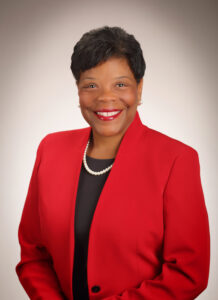
A lifelong educator and national thought leader for teaching and learning, Dr. Felicia C. Smith brings decades of experience to advance NCFL’s mission of working to eradicate poverty through education solutions for families.
Smith’s career in education spans nearly three decades, during which she has held various leadership roles across P-12, higher education, nonprofits, and philanthropy. Through her experience leading systems, she’s developed a unique perspective on a learner’s educational trajectory. She is driven by her commitment to educational equity and excellence for every learner. Her support of bottom-up innovations and top-down support has been her approach to advancing strong policies and practices that lead to transformative outcomes for children and families.
Before joining NCFL, Smith served as the senior director of Global Delivery at the National Geographic Society, where she oversaw the implementation and programming of domestic and global education strategies. Prior to that, Smith served as Assistant Superintendent of Teaching and Learning at Jefferson County Public Schools in Louisville, KY. She has also served as a senior program officer at the Bill & Melinda Gates Foundation and as associate commissioner for the Kentucky Department of Education. She began her career as an elementary classroom teacher and taught at the University of Kentucky. Recognized as an Aspen-Pahara Education Fellow, she serves on several national, regional, and state boards, including the Institute for Educational Leadership’s National Action Commission and New America’s National Commission on Learning Ecosystems. Smith also serves as Vice Chair of the Southern Regional Education Board. She serves as a coordinating council member of the Adult Literacy & Learning Impact Network (ALL IN).
Smith holds an Ed.D. in Educational Leadership and Administration and an M.A. in Elementary Education, with an emphasis on child and adult literacy development.